Everyone's first solo trip starts the same way — with a thought that won't go away. Maybe it's a photo someone posted from Thailand. Maybe it's the realization that you've been waiting for a friend who's never going to commit. Maybe it's the growing sense that you need to prove something to yourself. Whatever the spark, the fact that you're reading this means the thought is already there.
I took my first solo trip when I was twenty-three. I flew to Lisbon with a one-way ticket, a hostel booked for three nights, and absolutely no plan beyond that. I was terrified. I didn't speak Portuguese. I didn't know a single person in the country. And within forty-eight hours, I knew I'd made one of the best decisions of my life.
That trip changed everything for me — how I think about independence, about discomfort, about connection. It's the reason I eventually built Trippii. And it's the reason I'm writing this guide: because I know the gap between wanting to go and actually going feels enormous, and I want to shrink it for you.
This is everything I wish someone had told me before my first solo trip.
Why people travel solo
Let's start with the "why" because understanding it makes the "how" less scary. People travel solo for different reasons, and none of them is "because they have no friends."
- Freedom. You wake up when you want. You eat what you want. You change plans on a whim. There is no negotiation, no compromise, no "but I wanted to see the museum."
- Self-discovery. Traveling alone strips away every social role you play at home. You're not someone's colleague, partner, or child. You're just you. And that can be revelatory.
- Confidence. Navigating a foreign city alone, solving problems without backup, ordering food in a language you don't speak — these things build a kind of quiet self-assurance that stays with you long after you get home.
- Deeper connections. Counterintuitively, solo travelers often meet more people than group travelers. When you're alone, you're approachable. You start conversations. You accept invitations you'd decline if you had company.
- Logistics. Sometimes you want to go somewhere and nobody else can. The alternative isn't "go with someone" — it's "don't go at all." Solo travel means you never have to wait for permission.
Getting past the fear
Let's be honest: the idea of traveling alone is intimidating. Almost every solo traveler I've talked to — and I've talked to thousands — felt some version of fear before their first trip. Here are the most common fears, and why they're almost always bigger in your head than in reality.
"I'll be lonely." This is the number one fear, and the one that's most easily disproven. Hostels, travel apps, walking tours, and even just sitting at a bar create endless opportunities to meet people. Most solo travelers report feeling less lonely on the road than they do at home, because the travel environment is inherently social. If loneliness is your concern, read our guide on how to find travel buddies.
"It's not safe." Safety is a legitimate concern, but it's often overestimated. Millions of people travel solo every year without incident. The key is preparation, not avoidance. We'll cover safety in detail later in this guide, and you can also check our safety tips page.
"I don't know how to plan a trip." Neither did any of us before our first one. The internet has made trip planning extraordinarily accessible. Flights, accommodation, activities — everything is a search away. And overplanning is actually worse than underplanning for a solo trip. You need room to be spontaneous.
"I'll look weird eating alone." You won't. Nobody is watching. And if they are, they're probably thinking, "I wish I had the confidence to do that." Solo dining becomes one of the great pleasures of travel once you get over the initial awkwardness. Bring a book, sit at the bar, or just people-watch. You'll be fine.
"What if something goes wrong?" Something will go wrong. That's travel. You'll miss a bus, lose a charger, get rained on, eat something questionable. These are stories, not emergencies. The real emergencies are rare, and they're manageable with basic preparation — travel insurance, emergency contacts, copies of your documents.
Picking your first destination
Your first solo trip doesn't need to be ambitious. It needs to be achievable. Pick somewhere that minimizes the variables so you can focus on the experience of being alone, rather than the stress of navigating a difficult country.
Here's what to look for in a first solo destination:
- English is widely spoken (or you speak the local language). Communication reduces anxiety enormously.
- Strong tourism infrastructure. Good public transit, well-reviewed hostels, clear signage. You want a place that's easy to navigate.
- Active solo travel scene. Some cities attract solo travelers in huge numbers, which means you'll find more social hostels, meetups, and kindred spirits.
- Reasonable safety. Check travel advisories, but don't obsess over them. Most popular tourist destinations are perfectly safe with basic awareness.
- Direct flight or easy connection. Don't add a 14-hour layover to your first solo trip. Keep the journey simple.
Based on these criteria, here are destinations that consistently work well for first-time solo travelers:
How to plan without overplanning
The biggest mistake first-time solo travelers make is overplanning. A 47-item Google Sheet with color-coded time slots will collapse the moment you meet someone at breakfast who invites you on a day trip. Plans are useful. Rigid plans are prisons.
Here's what to book in advance:
- Flights. Obviously. But consider one-way tickets if your dates are flexible — they give you the freedom to extend or cut short.
- First 2-3 nights of accommodation. Having somewhere to go when you land removes the most stressful moment of the trip. After that, book as you go.
- Travel insurance. Non-negotiable. Get a policy that covers medical emergencies, trip cancellation, and lost belongings. Companies like SafetyWing and World Nomads cater specifically to travelers.
Here's what to leave unplanned:
- Daily itinerary. Have a loose list of things you want to see, but don't schedule them. Let your mood, the weather, and the people you meet guide your days.
- Onward travel. If you're doing a multi-city trip, resist the urge to book all connections in advance. You might love a place and want to stay longer. You might hate it and want to leave early.
- Activities and tours. Most can be booked a day or two ahead, or even on the spot. The exception is anything with limited capacity (popular hikes, museum tickets in peak season).
The packing mindset
Pack less than you think you need. Then remove two more things. Every experienced traveler will tell you the same thing: you'll never regret packing light, and you'll always regret packing heavy.
The essentials for any solo trip:
- Passport and a photocopy (stored separately)
- Travel insurance details (screenshot or printout)
- Debit/credit card with no foreign transaction fees
- Unlocked phone with eSIM or local SIM plan
- Universal power adapter
- Portable charger (at least 10,000mAh)
- One week of clothes that mix and match — you'll do laundry
- Comfortable walking shoes — your feet carry you everywhere
- A lightweight daypack for daily exploring
- Basic first-aid: painkillers, plasters, anti-diarrhea tablets
- A padlock for hostel lockers
What you don't need: a "just in case" outfit for every scenario, a full-size towel (hostels provide them or bring a microfiber), three books (one plus a Kindle), or anything you can buy cheaply at your destination.
The golden rule: if your bag weighs more than 10 kg, you're carrying too much. Your back, your mobility, and your mood will all thank you for going light.
Staying safe on the road
Safety isn't about paranoia. It's about awareness. The same common sense that keeps you safe at home applies on the road — you just need to recalibrate it for an unfamiliar environment.
Before you go:
- Share your itinerary with someone at home. Send them a copy of your passport, your accommodation bookings, and your flight details.
- Register with your country's embassy or consulate at your destination.
- Download offline maps (Google Maps lets you save regions for offline use).
- Set up a VPN on your phone — public Wi-Fi in hostels and cafés is not secure.
- Save emergency numbers: local police, your embassy, your travel insurance hotline.
On the ground:
- Trust your gut. If a situation feels off, leave. You don't owe anyone an explanation.
- Keep your valuables close. Passport, phone, and cards should be on your body or locked up — never left unattended.
- Watch your drink. This applies everywhere, not just bars. If you left it, get a new one.
- Stay connected. Check in with someone at home regularly. Share your live location with a trusted contact.
- Know your limits with alcohol. Being drunk and alone in an unfamiliar city is one of the few genuinely dangerous situations in travel.
For a deeper dive, read our full solo travel safety guide.
Making friends on the road
This is the part that transforms solo travel from "a trip you took alone" into "the time you met those amazing people." Making friends while traveling is easier than making friends at home, because everyone is in the same boat — away from their routines, open to connection, looking for someone to share the experience with.
Stay in social accommodation. Hostels are the single best place to meet fellow travelers. Choose ones with common areas, kitchens, and organized events. If hostels aren't your style, guesthouses and boutique hotels with communal spaces work too.
Say yes to everything (within reason). Pub crawl? Yes. Group hike? Yes. Cooking class with strangers? Yes. Invitation to someone's cousin's birthday party? Maybe yes. The more you put yourself out there, the more connections you'll make.
Use technology. Apps like Trippii connect you with travelers heading to the same destination. It takes the randomness out of meeting people and gives you a starting point before you even arrive.
Take group tours and classes. Walking tours, cooking classes, surf lessons, yoga retreats — any shared activity creates instant bonding. You don't need to become best friends. You just need someone to share dinner with tonight.
Be the one who initiates. Most solo travelers are waiting for someone else to say hi. Be the person who breaks the ice. Ask where someone's from, what they've seen, where they're headed next. Nine times out of ten, they'll be grateful you did.
Managing your money
Solo travel is often cheaper than you expect — and always cheaper than traveling in a couple or group when it comes to flexibility. Here's how to manage money on the road.
Set a daily budget and track it. The simplest approach: calculate your total budget, divide by the number of days, and track your spending with a free app like Trail Wallet or even a note on your phone. Knowing your number keeps you honest.
Accommodation is your biggest lever. A hostel dorm at €15/night vs. a hotel at €100/night — over two weeks, that's a €1,190 difference. If you're comfortable with dorms, your money goes dramatically further.
Eat like a local. Street food, market stalls, grocery stores, and local restaurants are always cheaper — and usually better — than tourist-facing spots. Save the nice restaurant for one special dinner.
Use the right cards. Get a debit card with no foreign transaction fees (Wise, Revolut, Charles Schwab). ATM fees and currency conversion markups are the silent killers of travel budgets.
Free activities are everywhere. Walking tours (tip-based), museums on free days, hiking, beaches, parks, street art, markets, festivals. The best travel experiences rarely cost money.
The mental game
Nobody talks about this enough. Solo travel is mentally and emotionally demanding — especially in the first few days. Here's what to expect and how to handle it.
The first 48 hours are the hardest. You'll question your decision. You'll feel disoriented. You might even feel homesick. This is completely normal. Push through it. By day three, the rhythm starts to settle and the magic kicks in.
Loneliness will visit. Not constantly, and not everyone experiences it the same way, but there will be moments — usually at dinner or late at night — when you wish someone was there. Let yourself feel it. Then go downstairs and talk to someone. The cure for loneliness on the road is always action, not isolation.
Decision fatigue is real. When every decision — where to eat, what to see, which bus to take — falls on you, it gets exhausting. Build in lazy days where you don't decide anything. Sleep in, wander without a destination, sit in a café and read. You don't need to optimize every moment.
Comparison will tempt you. You'll see Instagram posts from people having "better" trips, or meet travelers who've been to forty countries. Ignore all of it. Your trip is yours. The only metric that matters is whether you're growing.
Coming back is part of the trip
Nobody warns you about this: coming home after a solo trip can feel harder than leaving. You've changed, but your life at home hasn't. The contrast can be disorienting.
Give yourself a day or two to decompress before returning to work or routines. Process what you experienced. Write about it, talk about it, look through your photos. The lessons of solo travel take time to land — sometimes weeks or months after you're home, you'll realize how much you've grown.
And start planning your next trip. Not because you need to escape, but because now you know what's out there. The first solo trip is always the hardest. The second one is just exciting.
Ready for your first solo trip?
Download Trippii and connect with travelers heading where you're going. Solo doesn't have to mean alone.
Go. Just go.
I've written three thousand words here, and the truth is simpler than any of them: the hardest part of solo travel is buying the ticket. Everything after that — the planning, the packing, the fear, the loneliness, the friendships, the moments that take your breath away — all of it figures itself out once you're moving.
You don't need to have it all figured out. You don't need the perfect itinerary, the perfect backpack, or the perfect destination. You just need to start. Book the flight. Tell someone you're going. And then go.
Your future self will thank you. I promise.
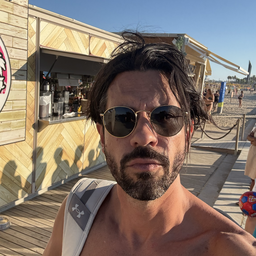
Daniel Silva
Founder of Trippii. Building the social layer for solo travelers. Has visited 40+ countries, most of them solo, and believes the best trips are the ones where you meet someone who changes how you see the world.